
 Image 1 of 1
Key Characteristics and Identification
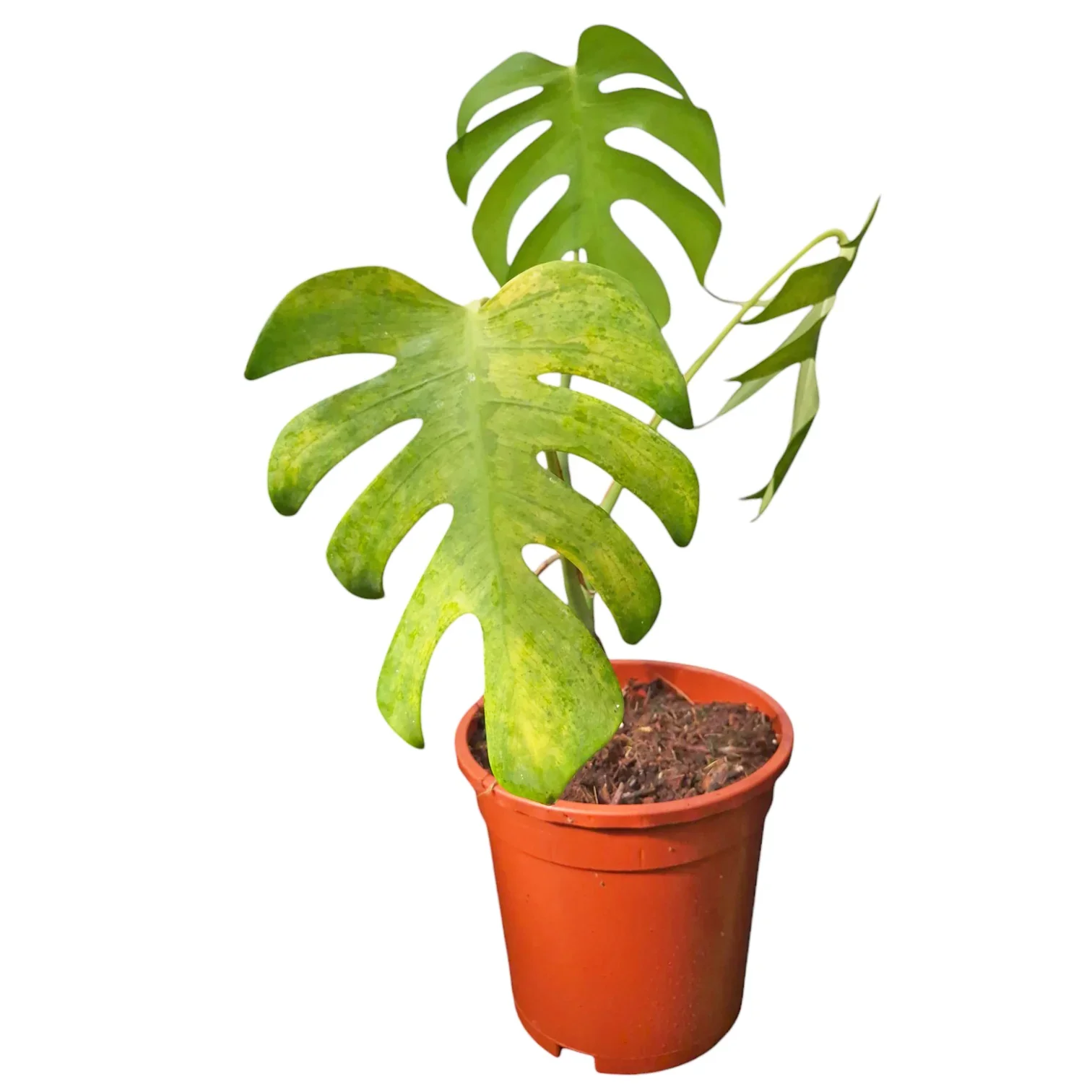
Distinguishing a true Sierrana from other similar varieties like the Monstera deliciosa or the Brazilian Common Form requires looking at specific morphological traits:
Deep Fenestrations: The leaf splits (pinnatisect fenestrations) often reach all the way to the midrib, giving it a "spider-like" or "rib-like" appearance.
Secondary Openings: Mature leaves develop clusters of secondary window-like fenestrations near the apex and midrib.
Repressed Sinus: Unlike the deep "ears" (sinus) at the top of a standard deliciosa leaf, the Sierrana has a flatter or shallower sinus where the leaf meets the petiole.
Compact Growth: It is generally smaller in scale than a standard deliciosa, making it more manageable for indoor growing.
Care and Growth Requirements
Light: Prefers bright, indirect light (40–60%). Avoid direct midday sun, which can scorch the leaves.
Watering: Water when the top half of the soil (about 1–2 inches) is dry to the touch. It dislikes soggy soil, which can lead to root rot.
Support: As a natural climber, it performs best when provided with a moss pole or trellis to encourage larger leaf development and upward growth.
Temperature: Ideal range is 65°F to 90°F (18°C–32°C). Protect it from cold drafts and temperatures below 50°F (10°C).
Humidity: Thrives in 60–80% humidity but can adapt to average household levels (40–50%) if monitored for browning edges.